The Best Retail Floors for High Customer Traffic
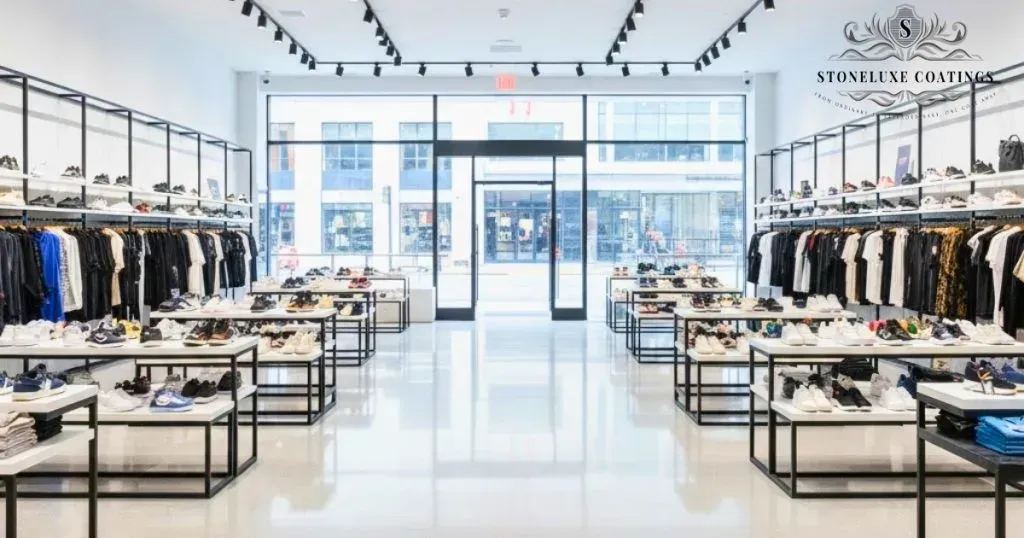
Retail floors take more abuse than almost any other commercial surface. Daily foot traffic, carts, displays, and constant cleaning all place stress on flooring systems.
In Minnesota, winter conditions add moisture, salt, and grit that accelerate wear even faster. Choosing the right high-traffic retail flooring is critical for safety, appearance, and long-term cost control.
StoneLuxe Coatings helps retailers across Minnesota install durable flooring systems designed to perform under continuous customer traffic.
Why High-Traffic Retail Floors Fail
Retail floors fail when they are not designed for constant movement and abrasion. Entryways see thousands of shoes each day, often wet or gritty from outdoor conditions.
Aisles experience rolling loads from carts and displays, while checkout lanes endure concentrated standing traffic that wears finishes unevenly. Cleaning chemicals also degrade weak surfaces over time. Tile grout absorbs moisture and stains, vinyl seams lift, and polished surfaces lose traction.
As floors wear, they become harder to clean and more dangerous for customers and staff.
Worn retail flooring damages brand perception. Shoppers notice cracked tiles, stained seams, and slippery spots. In high-traffic retail environments, failure happens quickly when flooring is not built for sustained use.
Key Requirements for Retail Flooring
High-traffic retail flooring must deliver durability first. The surface needs to resist abrasion, impact, and rolling loads without chipping or peeling. Slip resistance is equally important to reduce fall risk, especially during wet weather.
Maintenance matters in busy stores. Floors that clean quickly reduce nightly labor and downtime. Seamless systems prevent dirt buildup and make sanitation more efficient.
Visual consistency is another requirement. Retail flooring should support brand identity while maintaining a clean, professional appearance over time. When these requirements are met, retail floors become an asset instead of a constant maintenance concern.
Common Problem Areas in Retail Stores
Certain areas fail faster than others in retail spaces. Entryways take the heaviest abuse from moisture and debris. Checkout lanes wear unevenly due to constant standing and foot pivoting. Aisles and display zones experience rolling loads that stress weak materials.
Stock rooms and back-of-house areas often suffer from dropped inventory, pallet movement, and limited cleaning attention. High-traffic retail flooring must perform consistently across all these zones to prevent patchwork repairs and uneven wear.
Best Flooring Options for High Traffic Retail
Epoxy flooring systems are among the most durable options for retail environments. They create seamless, non-porous surfaces that resist abrasion, moisture, and chemicals. Concrete coatings provide similar benefits while allowing custom textures and finishes.
Polished concrete offers visual appeal but may lack slip resistance in wet conditions.
Luxury vinyl often struggles under sustained traffic and rolling loads. Tile commonly fails due to cracked grout and moisture intrusion. For long-term performance, epoxy and concrete coating systems consistently outperform traditional retail flooring materials in high-traffic settings.
Why Epoxy and Coatings Perform Better
Epoxy and concrete coatings bond directly to the slab, creating a continuous surface with no seams or grout lines. This structure resists wear from foot traffic and rolling equipment. Textured finishes improve traction without compromising cleanability.
These systems also handle frequent cleaning without decay.
Grease, dirt, and moisture stay on the surface instead of soaking in. Faster nightly cleanup reduces labor costs and keeps the store looking clean throughout the day. In high-traffic retail flooring applications, performance depends on durability, safety, and efficiency, areas where coatings excel.
Minnesota-Specific Retail Flooring Challenges
Minnesota retailers face unique challenges that accelerate floor damage. Snow, ice melt, and road salt are tracked inside daily during the winter months. Moisture spreads quickly across store floors, increasing slip risk and surface degradation. Freeze-thaw cycles stress concrete slabs, while seasonal humidity changes affect flooring adhesion.
Retail flooring systems must be designed to handle these conditions without cracking or delaminating. Choosing flooring built for cold-climate performance reduces long-term repair costs and keeps retail spaces safer year-round.
Retail Flooring and Customer Experience
Flooring plays a direct role in customer experience. Slip-resistant surfaces reduce accidents and liability. Clean, uniform floors reinforce brand trust and professionalism. Reduced noise from durable surfaces improves comfort in busy stores.
Customers may not consciously notice good flooring, but they immediately notice problems. High-traffic retail flooring that performs well supports smoother movement, better safety, and a more inviting shopping environment.
Planning a Retail Flooring Upgrade
Retail flooring upgrades require careful planning to minimize disruption. Many stores choose phased installations or overnight work to stay open during renovations. Material cure times and re-entry schedules must align with store hours.
Budgeting should focus on long-term durability rather than short-term savings. A properly planned upgrade reduces future downtime and maintenance costs while extending the life of the floor.
Why Retailers Choose StoneLuxe Coatings
StoneLuxe Coatings specializes in commercial epoxy and concrete coating systems built for high-traffic environments. Minnesota retailers choose StoneLuxe for flooring solutions that balance durability, safety, and appearance.
Their team understands retail traffic patterns, winter conditions, and operational demands. Custom textures and finishes allow floors to support branding while delivering long-term performance with minimal maintenance.
High Traffic Retail Flooring FAQs
What Flooring Lasts Longest in Retail?
Epoxy and concrete coating systems typically offer the longest lifespan under heavy traffic.
Is Epoxy Safe for Customers?
Yes. Slip-resistant textures improve traction and reduce fall risk.
How Slip-Resistant Are Coatings?
Additives can be tailored to meet safety needs without affecting appearance.
How Long Does Installation Take?
Most retail flooring projects are completed in phases over several days.
How Long Do Retail Floors Last?
High-performance systems can last years with proper installation.
Upgrade Your Retail Floors With Confidence
High-traffic retail flooring is an investment in safety, appearance, and long-term cost control.
For Minnesota retailers, choosing the right system prevents constant repairs and protects the customer experience. StoneLuxe Coatings provides durable retail flooring solutions designed to perform under nonstop foot traffic. With the right floor in place, your retail space stays safer, cleaner, and ready for every customer who walks through the door.